
Supplier Price vs Landed Cost for Indian Ecommerce
Learn how product price, freight, packaging, taxes, payment charges, reverse logistics, damage, and support combine into a realistic landed cost.
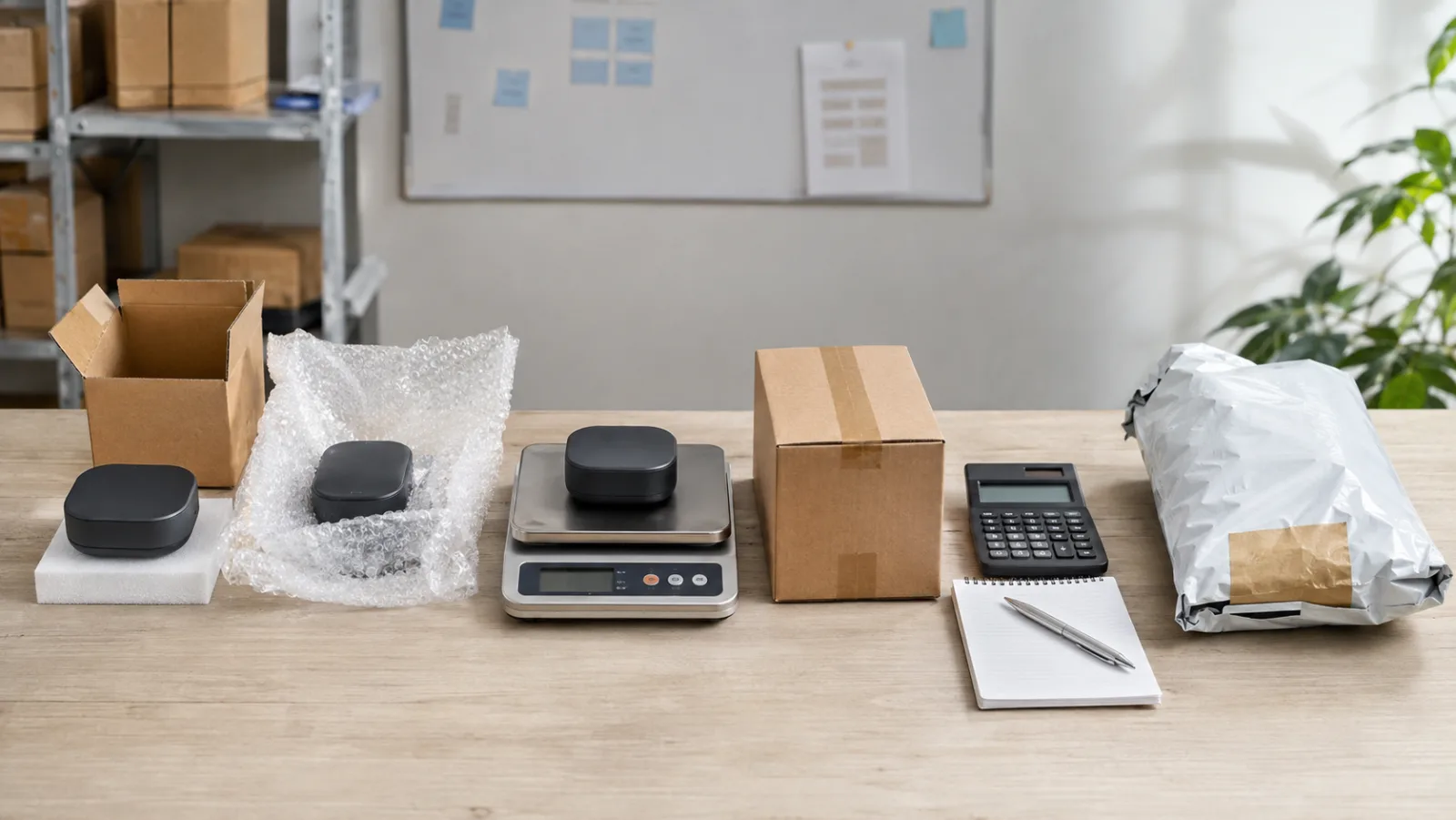
A product listed by a supplier at ₹200 does not necessarily cost the business ₹200 to sell. The item must be sourced, prepared, moved, delivered, paid for, and sometimes returned or replaced. Landed cost brings those order-related expenses into one decision view.
The exact definition depends on your fulfilment model, so document what your number includes.
Start with a comparable supplier price
Confirm the product, variant, quantity, material, dimensions, and packaging. A low price may refer to a smaller variant, bulk quantity, incomplete kit, or different quality.
Ask whether the quote includes tax, domestic freight, fulfilment, COD handling, and reverse logistics. Record minimum order quantity, payment terms, and the date of the quote. A public listing can change and should not be treated as a permanent contract.
Add the costs required to make it sellable
Depending on the arrangement, include:
- Freight from supplier to fulfilment location
- Inspection and handling
- Product and courier packaging
- Labels, inserts, and instructions
- Duties or taxes applicable to sourcing
- Storage and pick-and-pack charges
- Forward shipping by weight and zone
- Payment or COD collection fee
If the supplier ships directly, verify which of these items are included rather than assuming they disappear.
Account for unsuccessful outcomes
Some costs arise only when the customer cancels, refuses delivery, returns an item, reports damage, or needs replacement. Convert those outcomes into an expected allowance based on reasonable assumptions and later on your own cohort data.
For COD, forward and return movement may be incurred without collected revenue. For fragile products, replacement and packaging quality can materially change the real cost.
Do not use an unrelated seller’s RTO or return rate as if it were yours. Model a range.
Separate landed cost from acquisition cost
Advertising and creative costs are essential to contribution, but keeping them separate from landed product cost can make diagnosis easier.
One useful structure is:
- Landed and fulfilment cost per collected order
- Advertising cost per collected order
- Contribution before fixed overhead
This shows whether a problem comes from sourcing, operations, or acquisition.
Compare suppliers on total risk
The cheapest unit price may create higher cost through inconsistent quality, poor packaging, slow dispatch, missing variants, unclear returns, or unreliable stock. Evaluate sample quality, communication, invoice terms, fulfilment accuracy, and issue resolution.
Supplier claims and stock labels are not guarantees. Place a sample order and document what was actually received whenever practical.
Use scenarios rather than false precision
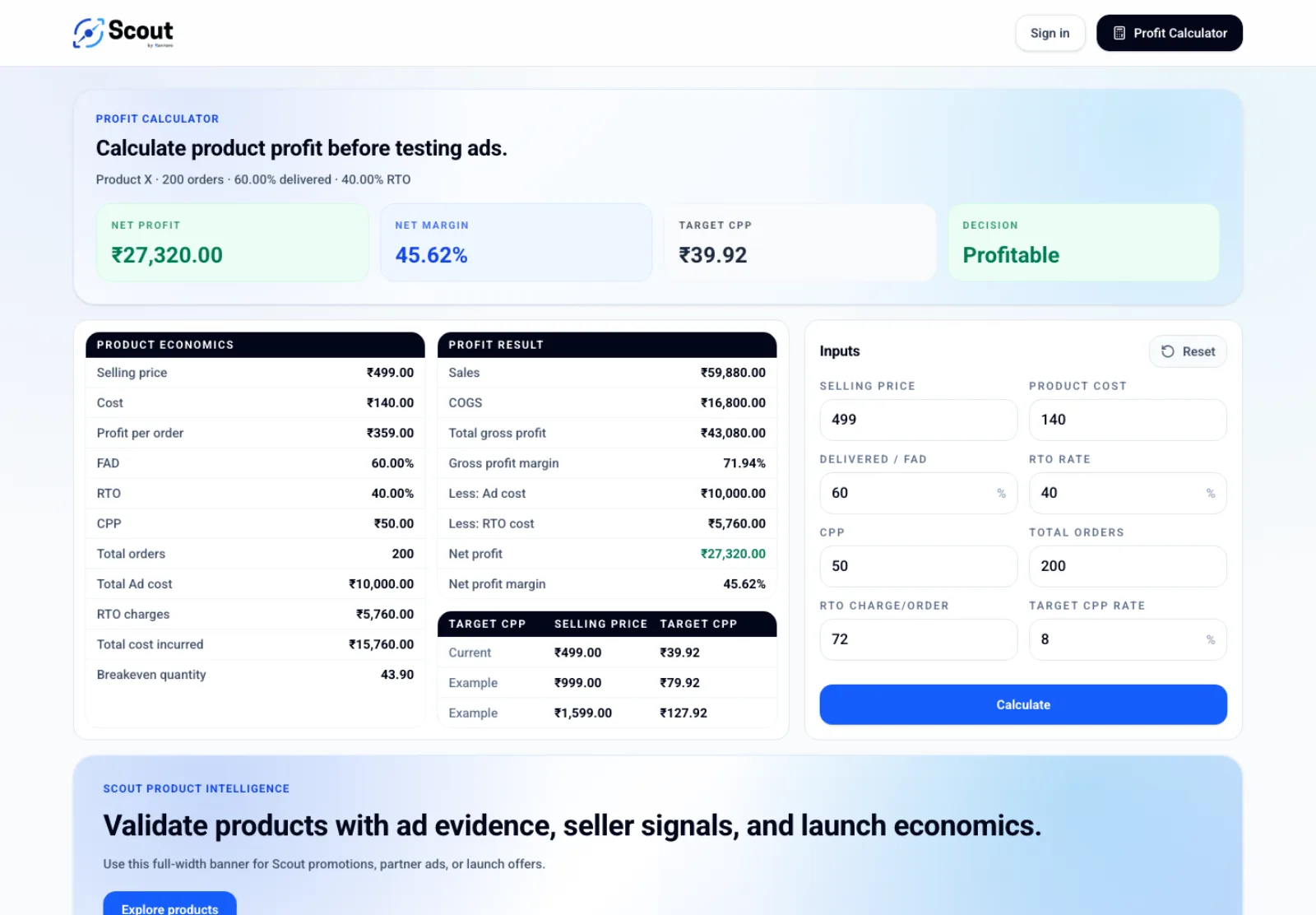
Build optimistic, expected, and stressed cases. Use conservative values for unknowns and make each assumption visible. The Scout profit calculator can help compare how shipping, acquisition, COD, return, and RTO assumptions affect contribution.
If the product works only in the optimistic case, it may not have enough room for a responsible test. If it remains viable under reasonable stress, you can define a clearer maximum acquisition cost.
Update the model with real observations
After launch, replace estimates with actual supplier invoices, courier charges, delivered-order data, returns, and replacements. Keep cohorts complete before judging performance; delivery outcomes arrive after ad-platform conversions.
Landed cost is not one universal accounting standard for every seller. It is a disciplined way to include the costs your decision would otherwise ignore. Consult a qualified accountant for tax and financial reporting treatment specific to your business.