
How COD and RTO Affect Ecommerce Profitability in India
Understand how cash on delivery, confirmation, cancellation, return-to-origin costs, shipping, and collected revenue change ecommerce unit economics.
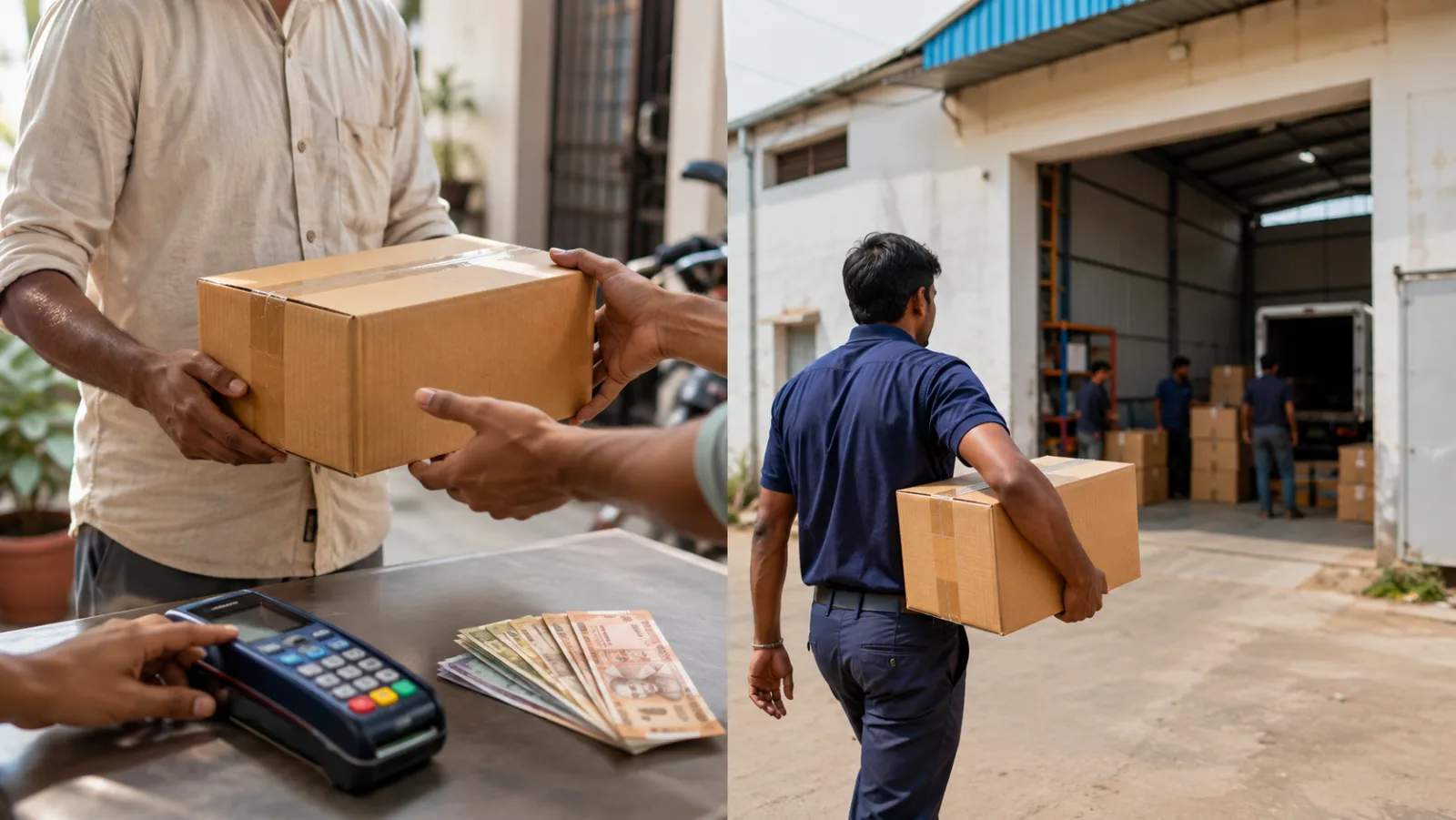
Cash on delivery can expand access and customer confidence in India, but it also changes the meaning of an order. Revenue is realised only when the shipment is accepted and payment is collected. Cancellation, failed delivery, and return to origin can turn apparently strong order volume into weak cash flow.
A useful product model follows the complete order journey.
Distinguish the key outcomes
Confirmed order: The customer or verification process confirms the intention to receive the shipment.
Delivered order: The courier completes delivery and the payment is collected where applicable.
Customer return: A delivered product is returned under the store’s policy.
Return to origin: Delivery does not complete and the parcel travels back to the sender or fulfilment partner.
These outcomes carry different costs. Treating every placed order as revenue hides the most important risk.
Calculate on collected orders
Start with total orders, then estimate the share confirmed, shipped, delivered, returned, and collected. Apply product cost and forward shipping according to your supplier agreement. Add reverse logistics, RTO charges, payment fees, packaging, support, and replacement allowances where they occur.
A simplified contribution model is:
Collected revenue minus product, advertising, fulfilment, payment, return, and RTO-related costs.
The timing of cash matters too. COD remittance delays can create working-capital pressure even when the final contribution is positive.
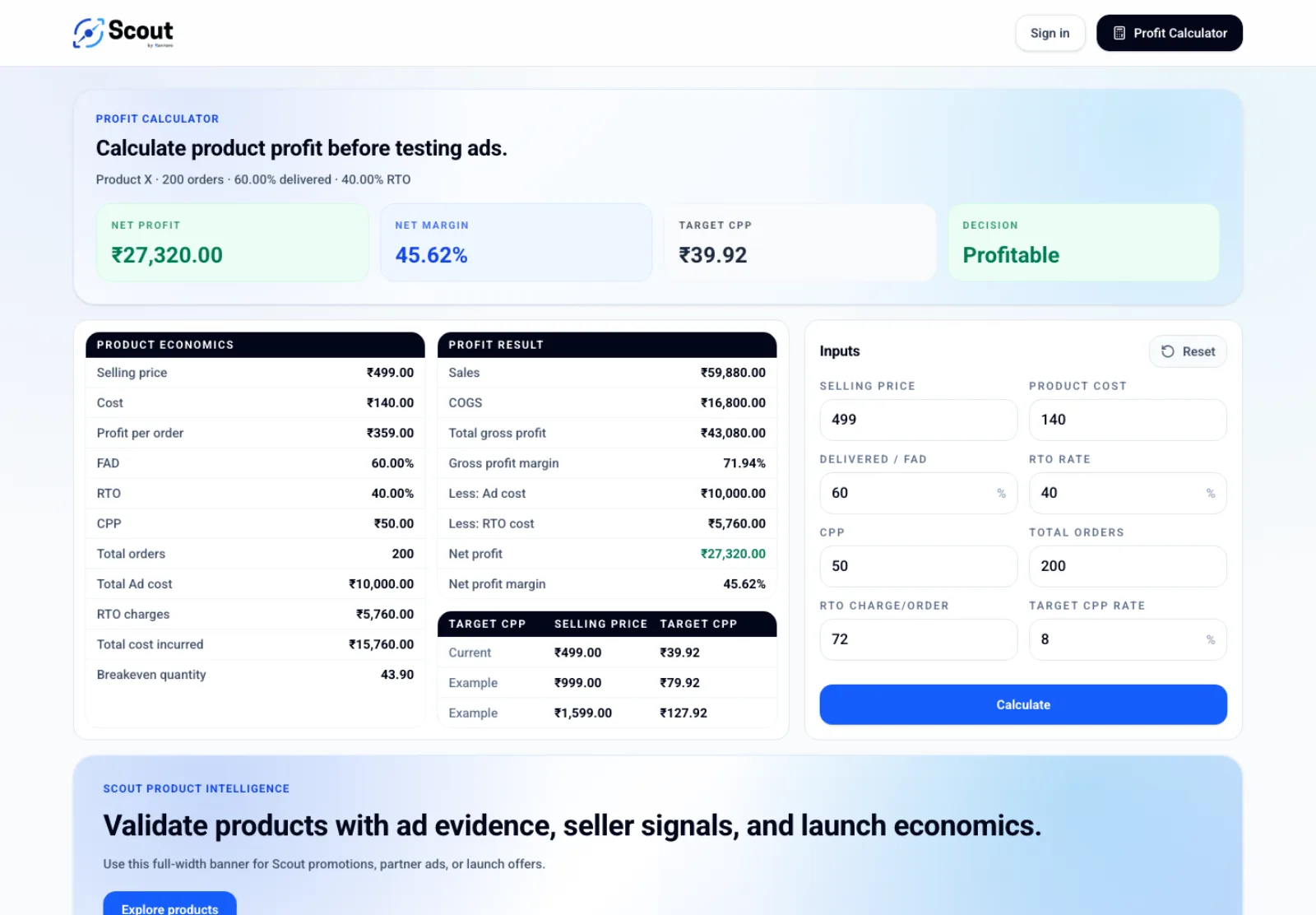
Use the Scout profit calculator to compare assumptions. It is a planning tool, not a promise of actual results.
Understand why RTO varies
RTO can be affected by traffic quality, misleading creative, accidental orders, delivery speed, address quality, unreachable customers, product expectation mismatch, courier coverage, season, and local buying behaviour.
A percentage borrowed from another seller or category may not describe your campaign. Begin conservatively and replace assumptions with your own cohort data as the test progresses.
Improve the quality of the order
Reducing RTO starts before checkout. Make the product, quantity, price, delivery expectation, and limitations clear in the advertisement and landing page. Avoid claims that create unrealistic expectations.
Operational practices may include:
- Clear address and phone validation
- Order confirmation appropriate to the customer journey
- Transparent delivery communication
- Fast fulfilment and reliable tracking
- Packaging that protects the product
- Support for genuine delivery questions
- Careful review of traffic sources and creative promises
The right process depends on your business and must respect consent, privacy, and communication rules.
Segment instead of using one blended rate
Track outcomes by product, creative, audience, geography, payment method, courier, and order cohort. A blended RTO rate can hide a specific campaign or region causing most of the loss.
Do not react to tiny samples as if they are stable. Look for repeatable patterns and distinguish customer cancellation from courier or operational failures.
Set test stop conditions
Before running ads, decide the maximum acceptable cost per collected order and the RTO level at which the product needs investigation or pause. Include enough time for delivery outcomes to mature; early order metrics can look better than final cohorts.
Evaluate creative performance together with fulfilment performance. A campaign is not successful if it produces inexpensive orders that are not collected profitably.
Keep the decision conservative
COD can be a useful payment option, and RTO is a manageable operating risk for many sellers. Neither should be reduced to a universal benchmark. Model a range, run a bounded test, and update the model with your own delivered-order evidence.
Scout keeps COD and RTO assumptions visible alongside product and advertising signals so the excitement of an ad does not erase the economics.